Hip Flexors Run Deeper Than You Think
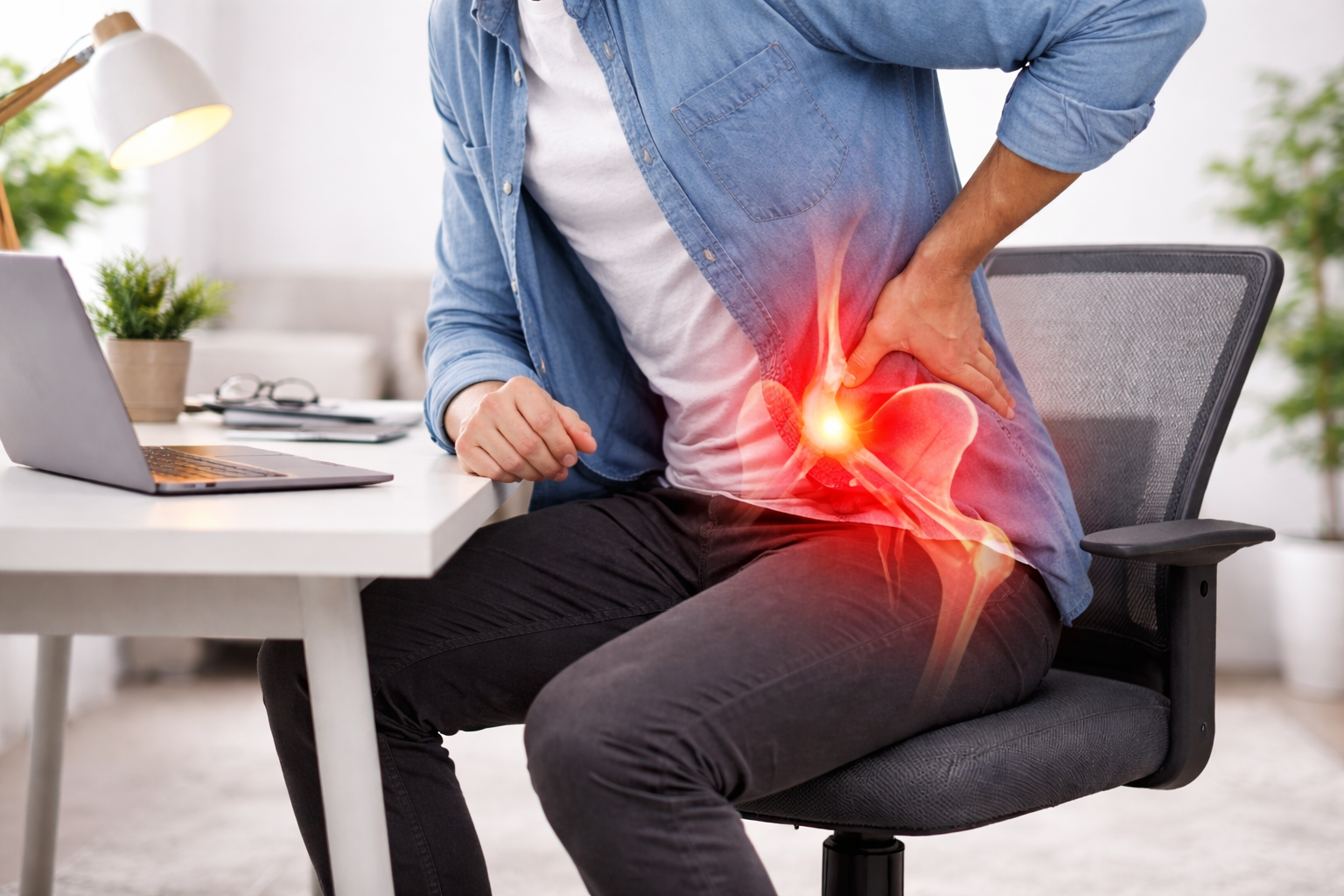
Tight hips are a common complaint — especially if you sit at a desk, drive often, or train hard. But when we talk about the hip flexors in osteopathy, we’re talking about much more than a stretch that feels good after a workout.
The Hip Flexors: More Than One Muscle
The primary hip flexor is the iliopsoas, made up of two muscles:
Psoas major – originates from the lumbar spine
Iliacus – lines the inside of the pelvis
Together, they attach to the top of the thigh bone and work to lift the leg. What makes this group so important is how deep it runs through the body.
The psoas doesn’t just cross the hip — it connects directly to the lower spine. That means it influences not only hip movement, but also lumbar posture, spinal stability, and even how you breathe.
Deep Anatomy, Wide Influence
Because the hip flexors sit so deep in the abdomen and pelvis, they’re closely related to:
The lower back
The diaphragm (your primary breathing muscle)
Abdominal organs
The nervous system
This is why tight or overactive hip flexors can contribute to more than just “tight hips.” They may be linked to:
Persistent lower back pain
Forward (anterior) pelvic tilt
Reduced core stability
Shallow breathing patterns
Ongoing groin discomfort
In osteopathy, we often assess the hip flexors when someone presents with back pain, pelvic imbalance, or even unexplained abdominal tension.
Sitting, Stress & the Modern Lifestyle
Prolonged sitting keeps the hip flexors in a shortened position for hours at a time. Over time, the body adapts. The muscles may become shortened or overactive, while opposing muscles — such as the glutes — become underactive. Stress can also play a role. The psoas has close relationships with the diaphragm and the body’s fight-or-flight response. Chronic stress may contribute to increased tone through this deep front-line of the body.
A Whole-Body Approach
At Elevate Osteopathy, treatment doesn’t just focus on stretching the hip flexors. We look at:
Lumbar spine mobility
Pelvic alignment
Core and glute activation
Breathing mechanics
Daily movement habits
By addressing the deeper connections, we aim to restore balance rather than simply chase tightness.
If you need help with your hip flexors or lower back pain book online today at Elevate Osteopathy.