Sciatic VS Muscle Pain: How to Determine the Difference
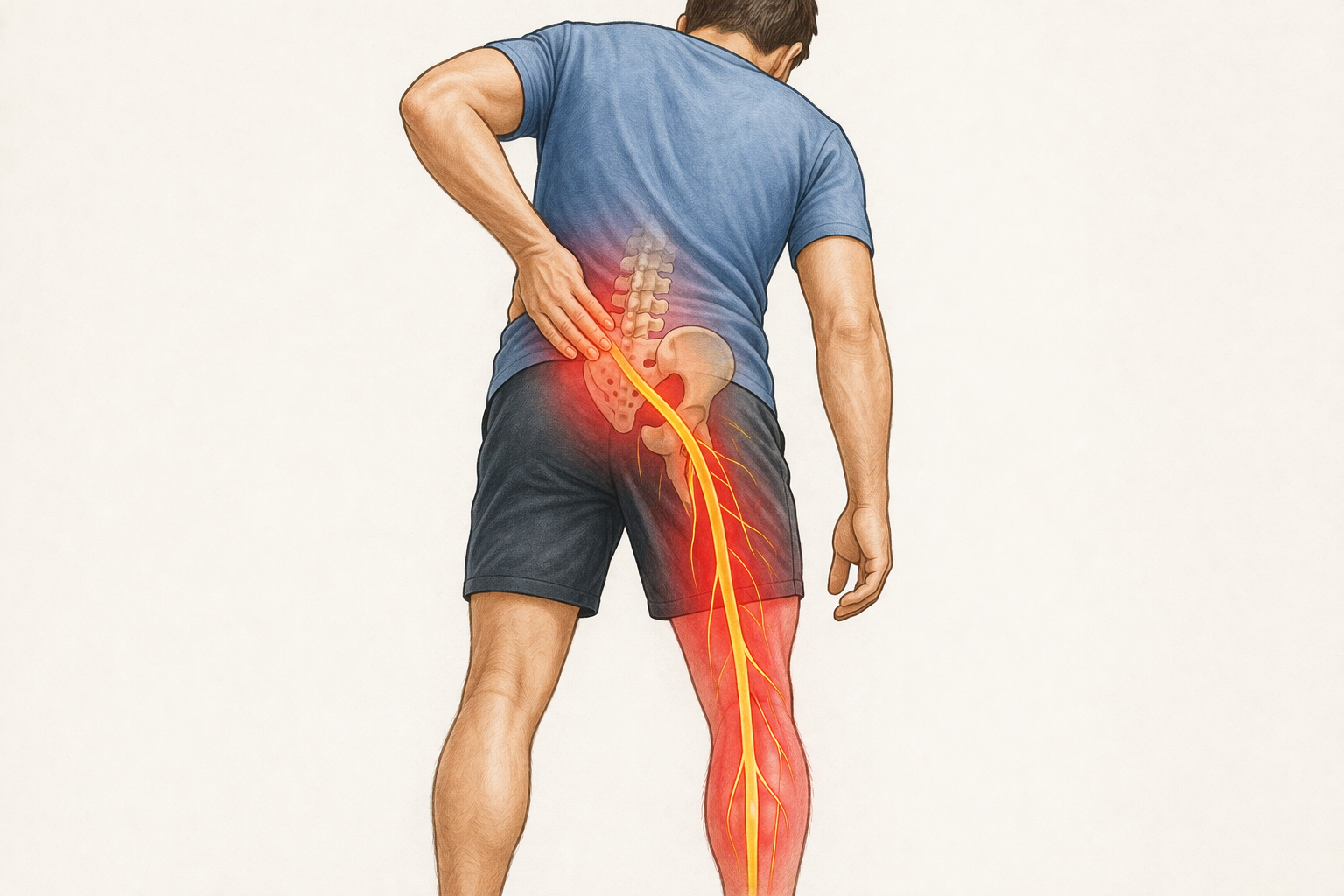
Lower back and leg pain are incredibly common, but not all pain has the same cause. Two of the most frequent causes that are commonly mistaken for one another are sciatic pain and muscular tightness. While they can feel similar at first, understanding the difference is important because it directly affects how the issue should be treated.
Sciatic pain, or ’sciatica’ as it’s commonly referred to, is not a condition on its own but a symptom caused by irritation or compression of the sciatic nerve, which runs from the lower back through the hips and down each leg. When this nerve is affected, it typically produces a sharp, shooting pain that travels down one side of the body, often accompanied by tingling, numbness, or even weakness in the leg. The pain may worsen with prolonged sitting, bending, or certain movements, and it usually follows a clear pathway along the nerve.
In contrast, tight muscles—especially in the lower back, glutes, or hamstrings—tend to produce a dull, aching sensation rather than sharp pain. This discomfort is usually more localised, although it can sometimes radiate slightly into the surrounding areas. Unlike sciatica, muscular tightness does not typically cause neurological symptoms like pins and needles or numbness. Instead, it often feels worse after inactivity and improves with movement, stretching, or massage. That said, tight muscles can occasionally irritate nearby nerves, which is why the two issues are sometimes confused.
Distinguishing between the two matters because each responds best to a different approach. Sciatic pain often requires treatment aimed at relieving pressure on the nerve and improving how the spine and surrounding structures are functioning. Muscular tightness, on the other hand, usually responds well to hands-on therapy, stretching, and strengthening exercises that restore balance and mobility.
Osteopathy takes a whole-body approach to this process, assessing not just the site of pain but how different parts of the body may be contributing to the problem. By identifying whether the source of discomfort is nerve-related or muscular, treatment can be tailored to address the root cause rather than just the symptoms. For example, an Osteopath may use gentle joint mobilisation to improve movement in the lower back and pelvis, reducing pressure on the sciatic nerve. They might also apply soft tissue techniques to release tension in surrounding muscles, helping to ease irritation and improve overall nerve mobility.
If your pain is persistent, worsening, or includes symptoms like numbness, tingling, or weakness, it is worth seeking a professional assessment. At Elevate Osteopathy, we can help by addressing the issue early and making a significant difference in recovery to help prevent it from becoming a longer-term problem.